
Real Estate Photography Is Starting to Look Like Photography Again
For a long time, real estate photography has been moving in one direction.
Brighter.
Wider.
Brighter still.
Open the shadows. Lift the exposure. Make every room feel enormous. Make every window glow. Make sure nothing is ever allowed to become too dark.
Somewhere along the way, though, we began removing one of the very things that makes a space beautiful.
Light.
Not brightness.
Light.
There is a difference.
Bright isn’t the same as well lit.
Light has direction.
It falls across a floor. It catches the edge of a cabinet. It reveals the texture of stone. It moves through a window and gradually disappears into another part of the room.
And wherever there is light, there must also be shadow.
If you remove every shadow, you remove the evidence that light was ever there.
That matters because we don’t experience architecture as a uniformly illuminated collection of surfaces.
We experience depth.
Material.
Color.
Contrast.
View.
Atmosphere.
A photograph of a room should preserve those things — not process them away.
A room isn’t flat. Why photograph it that way?
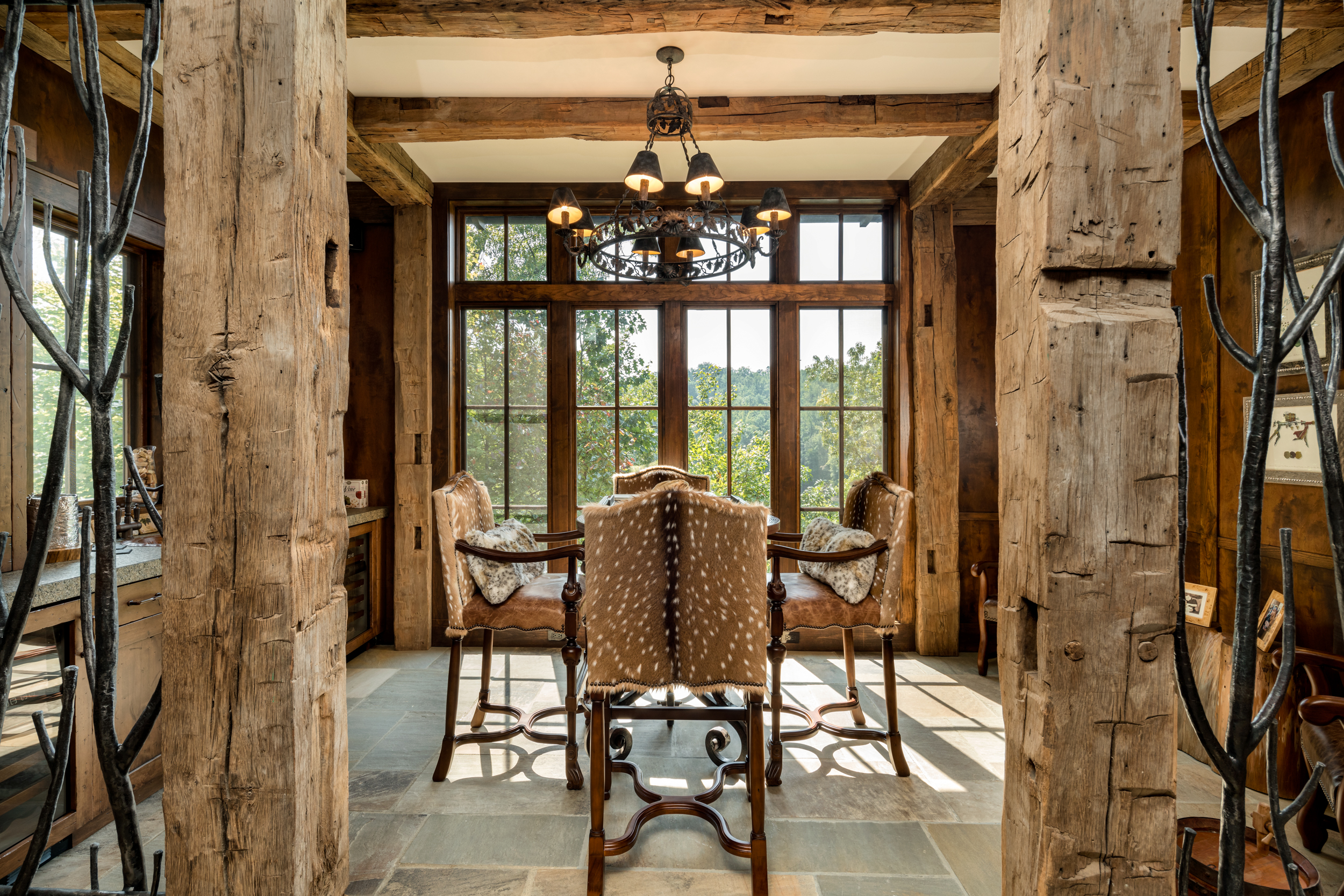
The problem isn’t HDR.
HDR itself isn’t the enemy.
Over-processing is.
Flattening is.
High dynamic range photography was developed to solve a legitimate problem: a camera can’t always capture the enormous range between the darkest and brightest parts of a scene in a single exposure.
Used thoughtfully, multiple exposures can help us create a photograph closer to what our eyes actually experienced.
But when every shadow is lifted, every highlight restrained and every surface pushed toward the same brightness, we haven’t simply changed the exposure.
We’ve changed the architecture.
We’re not arguing for dark photography. We’re arguing for dimensional photography.
A room can be bright and still have depth. It can be filled with white surfaces and still contain shadow. It can have enormous windows and still preserve what is happening outside them.
Brightness doesn’t reveal architecture. Contrast does.
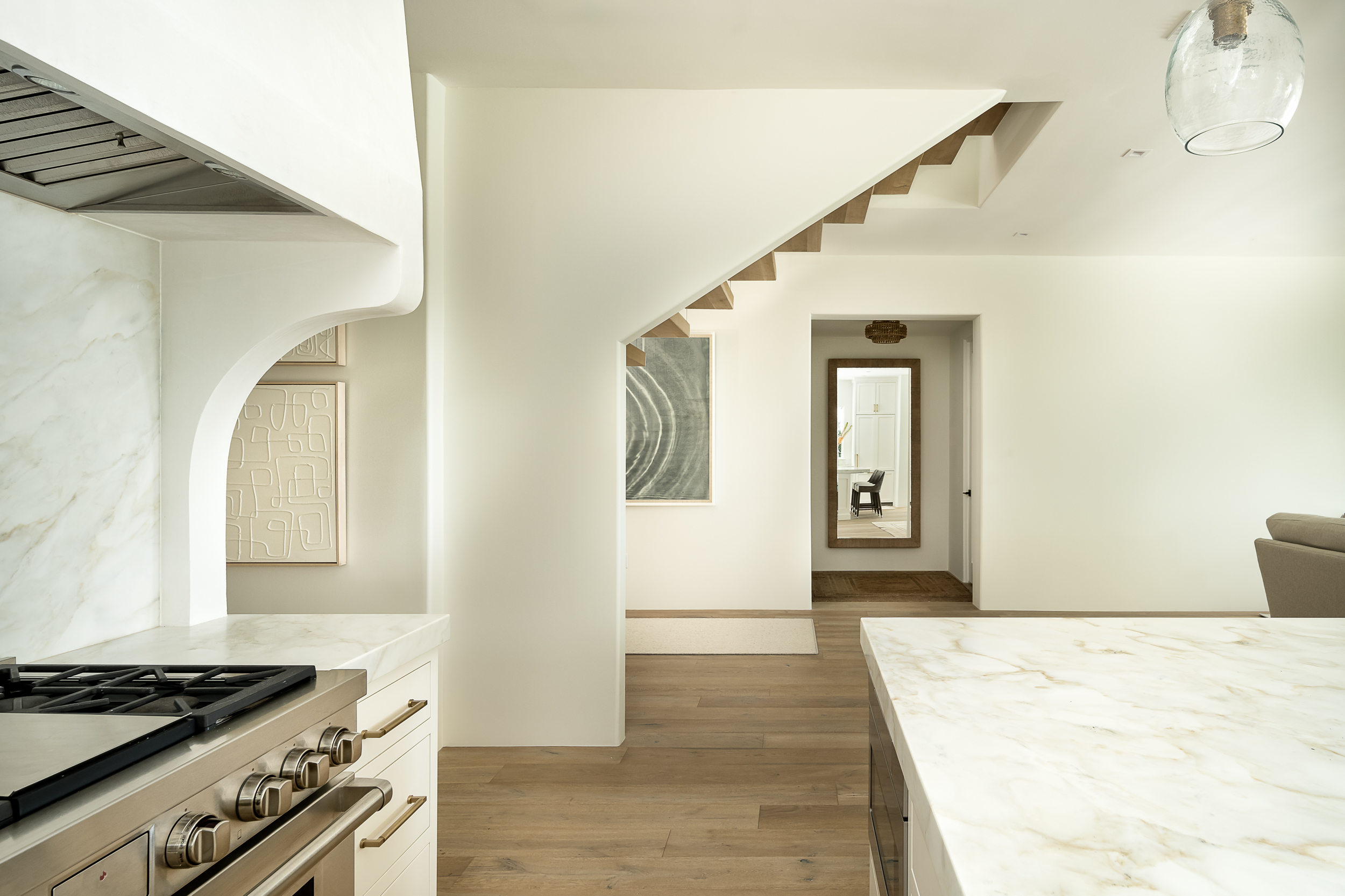
Recesses become less recessive. Planes lose separation. Materials lose dimension. The natural progression from light into shadow begins to disappear.
The photograph may become brighter.
But the room becomes flatter.
And my resistance to that look has never really been about brightness.
It’s about what gets lost in the pursuit of it.
Architecture needs shadow because architecture needs dimension.
I’ve been photographing interiors this way for sixteen years.
When I began photographing real estate and interiors in 2010, I came to photography after 23 years as an interior designer.
That background changed the way I looked through a camera.
I knew what white cabinetry was supposed to look like.
I knew what happened when warm interior lighting contaminated a paint color.
I understood why a particular material had been specified, why a sightline mattered, why one surface was meant to advance while another receded — and why flattening all the light in a room could also flatten the architecture.
So I began combining flash exposures with ambient exposures and blending them by hand.
Today, the technique is commonly called flambient photography — flash + ambient.
For me, it wasn’t a trend.
It was simply the best way I knew to make a photograph look and feel like the room standing in front of me.
Flash solves one problem. Ambient light solves another.
Flash gives me control.
It helps establish accurate color, particularly in whites and neutrals. It can separate surfaces, control unwanted color casts and provide clean information about materials.
But flash alone can strip away the very atmosphere I’m trying to preserve.
Ambient exposures hold something different.
They hold the natural falloff of light.
The glow.
The shadows.
The relationship between the interior and the windows.
The feeling of actually standing in the room.
Neither exposure is the photograph.
The photograph happens in the relationship between them.
That’s why I still blend these exposures by hand.
I’m not asking software to decide what matters.
I’m deciding.
And that decision is rarely about making something brighter.
It’s about deciding what the room needs in order to remain dimensional.
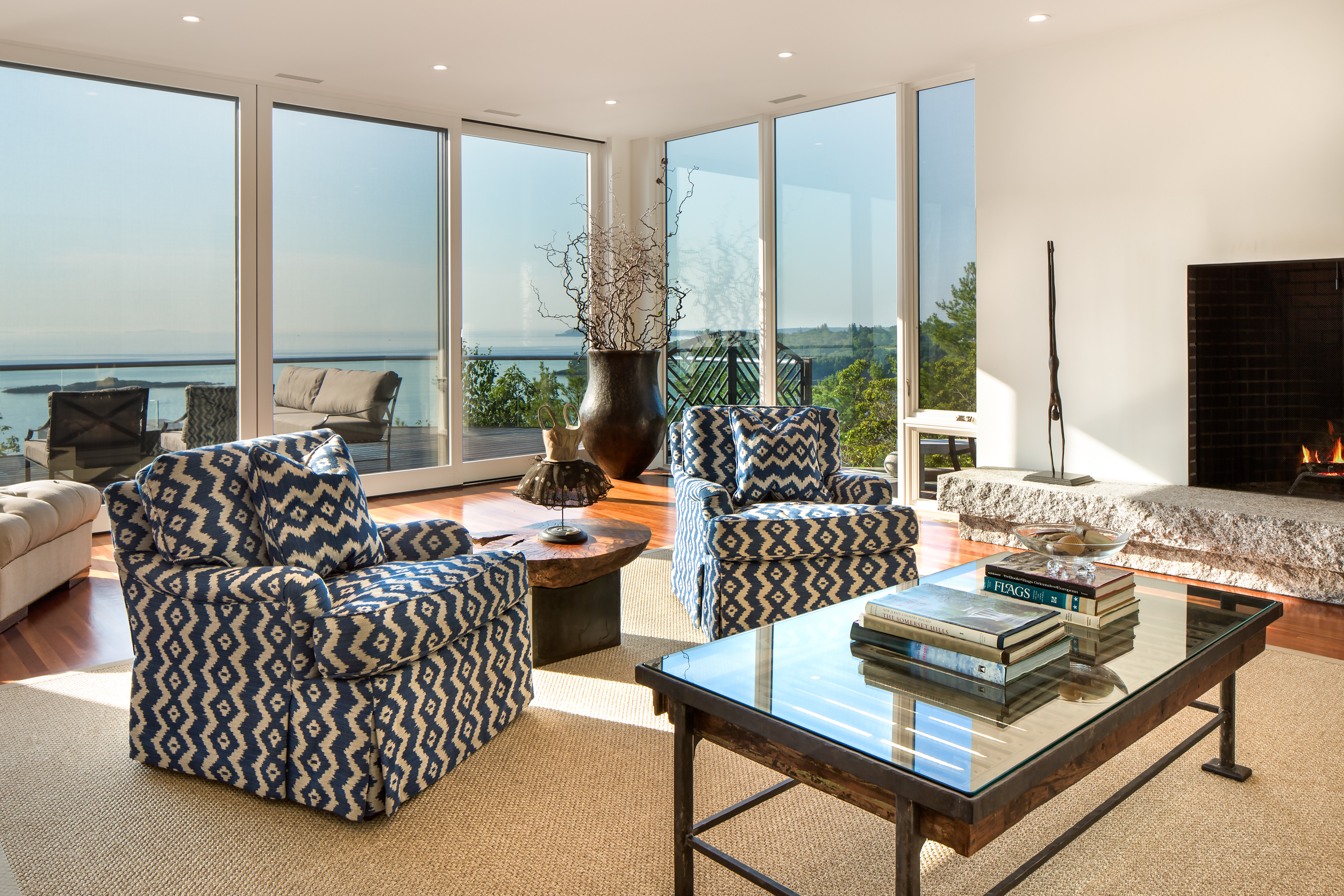
A window should still feel like a window.
One of the easiest places to see the difference is in the view outside.
Our eyes are remarkably good at adjusting between a darker interior and the brighter world beyond a window. Cameras aren’t.
So photographing an interior well often means balancing two dramatically different exposures without making either one feel artificial.
The goal isn’t simply to “save the window.”
The goal is to preserve the relationship between inside and outside.
Especially here in Western North Carolina, that relationship can be a significant part of the architecture itself.
A mountain view isn’t decoration.
Sometimes it’s the reason the house is there.
Luxury doesn’t mean brighter.
Something interesting is beginning to happen in real estate imagery.
The aesthetic is shifting.
More sophisticated listings are beginning to embrace photographs that feel less processed and more editorial — images with depth, restrained highlights, believable windows, accurate materials and actual shadow.
In other words, real estate photography is beginning to borrow from something architectural and interiors photographers have understood for a very long time:
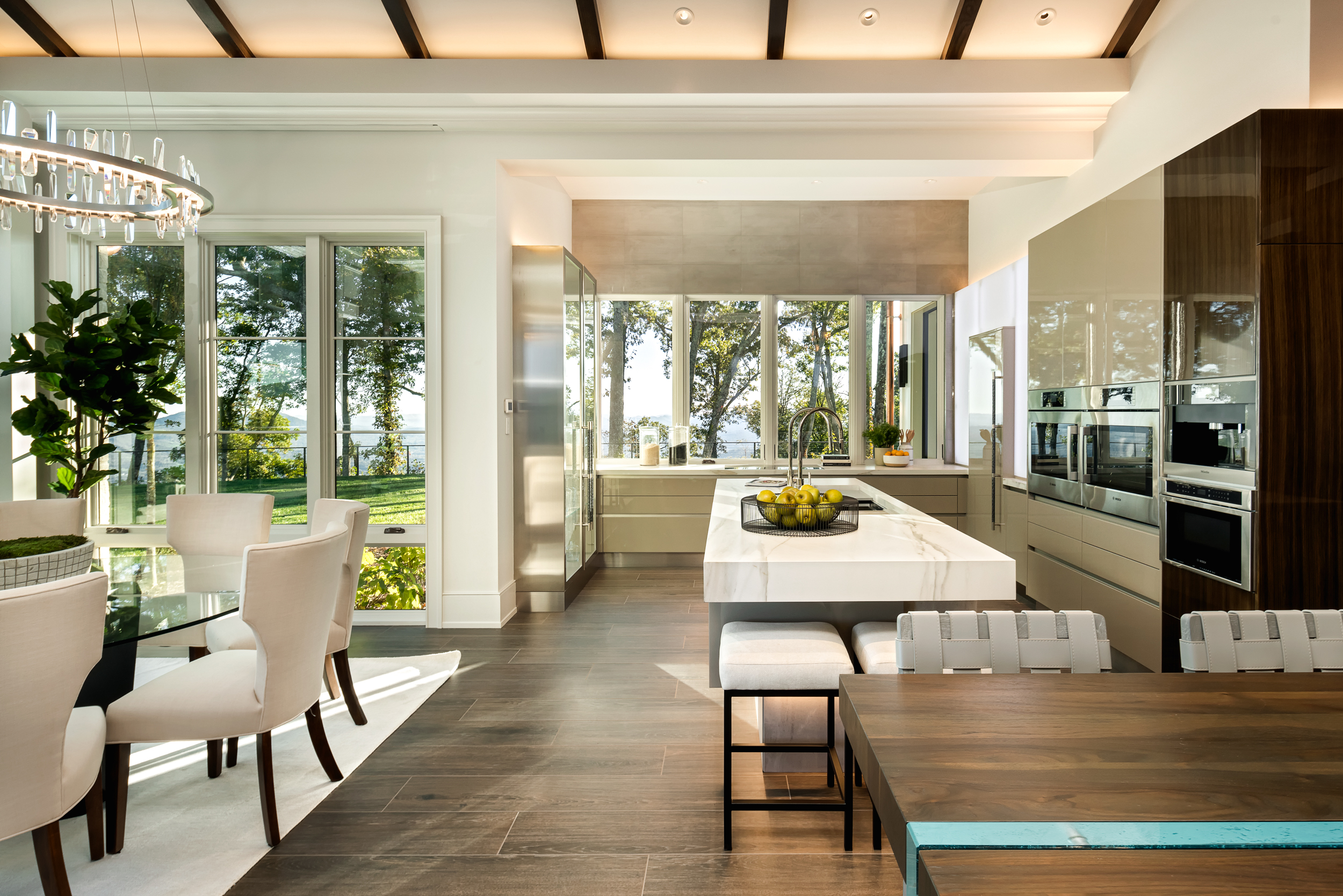
Atmosphere has value.
A luxury property shouldn’t necessarily be photographed brighter.
It should be photographed more intentionally.
There is an enormous difference.
The camera is only part of the process.
Anyone can learn a technique.
You can learn where to place a flash.
You can learn to bracket exposures.
You can learn Photoshop.
But technique isn’t the same thing as seeing.
After sixteen years of photographing spaces — and more than two decades designing them before that — I’ve become increasingly interested in something much simpler:
What is the room actually doing?
Where is the light coming from?
What did the architect intend me to notice?
What material needs to retain its texture?
What should recede?
What should remain quiet?
What is the view contributing?
And where does the photograph need to stop interfering and simply allow the space to be what it is?
Because ultimately, the goal isn’t to demonstrate a photographic technique.
The goal is to make the technique disappear.
The viewer shouldn’t be thinking about flash.
Or ambient exposures.
Or blending.
Or HDR.
They should be thinking:
I want to be there.
Maybe that’s why, after sixteen years, I’m encouraged by where real estate photography seems to be heading.
Not toward darker photographs.
Not toward brighter photographs.
Toward more thoughtful ones.
Toward images that allow architecture to have dimension again.
Toward photographs that understand that shadow isn’t a defect.
That windows don’t have to scream.
That white has a color.
That materials have a voice.
And that sometimes the most important thing a photographer can bring into a room isn’t another piece of equipment.
It’s the ability to notice.
Real estate photography is starting to look like photography again.
And I’ve been waiting a long time to see it.